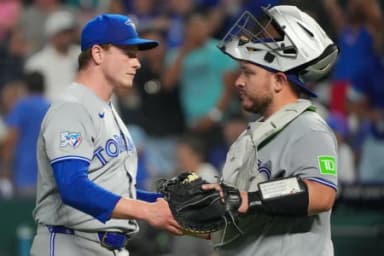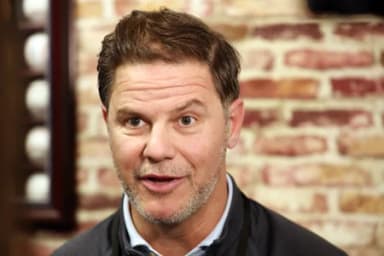

Rogers Communications and John Schneider now sit under a new Toronto sports power structure after Rogers moved to full MLSE control.
That is the real headline from Friday's ownership news. Rogers agreed to buy the remaining 25% of Maple Leaf Sports & Entertainment from Kilmer Sports for C$4.35 billion, a move that gives the company full control of Toronto's biggest sports empire.
For Blue Jays fans, the twist is obvious. Rogers already owned the club outright, but this deal pulls the rest of the city's major team assets under the same roof, including the Leafs, Raptors, Toronto FC, and Scotiabank Arena through MLSE.
That creates a different kind of Toronto sports map. The Blue Jays are no longer just the baseball arm inside a telecom giant with media reach. They now sit next to the rest of the city's premium teams in one much bigger sports-and-content machine.
It also closes out Larry Tanenbaum's long run at the center of MLSE. Tanenbaum had held the remaining 25% through Kilmer Sports after Rogers closed its purchase of Bell's 37.5% stake last year to reach 75%.
That matters because Tanenbaum was not just a shareholder. He had been the steady public face of MLSE ownership for years, and this move marks a clean handoff in how Toronto's biggest teams will now be governed.
What this could mean for the Blue Jays
The first thing it does is raise expectations. When one company controls the Blue Jays, Sportsnet, and now all of MLSE, fans are going to expect sharper alignment, bigger ambition, and fewer excuses when it comes to spending and long-term planning.
Rogers has already shown where it wanted this to go. After buying Bell's share in 2025, the company said live sports and entertainment were a critical part of its core business strategy.
Now the scale is much larger. The Wall Street Journal reported Rogers plans to combine MLSE with the Blue Jays and Sportsnet inside one sports and media enterprise, which puts even more focus on how the company chooses to build winners.
That does not guarantee anything on the field for Schneider's club. Ownership size does not fix a bullpen, a lineup slump, or a bad deadline call by itself.
But it does change the pressure around the Blue Jays. When the same company controls this much of Toronto sports, every baseball decision starts to look like part of a larger corporate vision instead of a stand-alone club move.
So this is bigger than a boardroom shuffle. Rogers just tightened its grip on Toronto sports, ended the Tanenbaum era, and put the Blue Jays inside an even larger structure that fans will expect to act like a heavyweight.
Will full Rogers control raise the pressure on the Blue Jays to act like a bigger club?
Voting closed